
Back, Neck & Sciatic Pain
Expert management of neck pain, back pain and sciatica, from acute episodes to long-standing symptoms.

Experiencing Back Pain
Back pain affects around four out of five Australians at some point in life.
Whether it began yesterday or has been troubling you for years, it can interfere with work, family life, sleep, exercise and confidence. It’s common to worry about what your pain means or to lose trust in your back.
The good news is that most people improve. Understanding why your pain has developed is often the first step towards recovery.
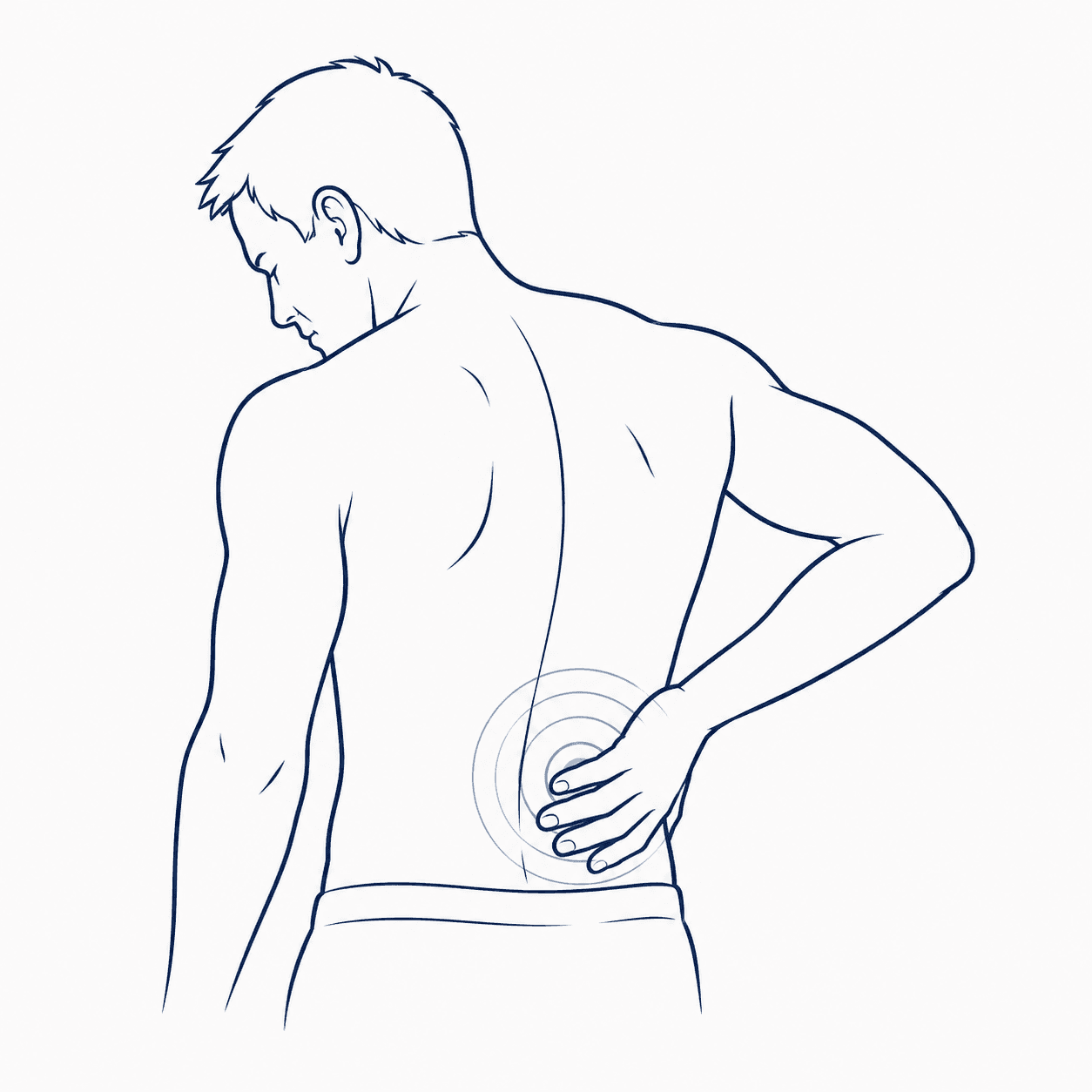
Back Pain is a Symptom, Not a Diagnosis
“Back pain” describes where you feel it, not why it’s there. It’s a symptom, not a diagnosis — and two people with very similar pain in a very similar location can be experiencing it for entirely different reasons.
Pain can relate to a specific tissue injury, to movement patterns that have built up over years, to previous injuries, to how your spine is being loaded day-to-day, to spinal mechanics, to lifestyle factors, or to a nervous system that has become more sensitive to a particular movement or position — often, it’s a combination of several of these.
This is why a generic exercise sheet or a standard back-pain protocol can work well for one person and do very little for another — it was never built around what’s actually driving their specific pain. Working out which of these factors matters for you is the point of a proper assessment, not an afterthought to it.
How We Can Help
Treatment is guided by what your assessment finds, not a standard protocol.
Spinal Pain with Difficulty Moving
A sudden onset of back or neck pain, affecting ability to function in day-to-day life.
Radicular Leg or Arm Pain
Pain, numbness, tingling or weakness travelling into the leg or arm.
Recurrent Flare-Ups
Back pain that settles and then returns, sometimes triggered by particular activities.
Persistent Spinal Pain
Pain that has continued for months or longer, including where previous treatment hasn't helped.
Post-operative Spinal Rehabilitation
Structured rehabilitation following spinal surgery, guided by your surgeon's protocol.
Assessment Approach
Every assessment begins with one question: “Why is this person experiencing this pain?”
Back pain is rarely explained by a single finding. Instead, we explore how your pain relates to the way your body moves and functions, your individual anatomy and the broader context of your daily life. By considering these factors together, we can better understand what is driving your symptoms and tailor treatment specifically to you.
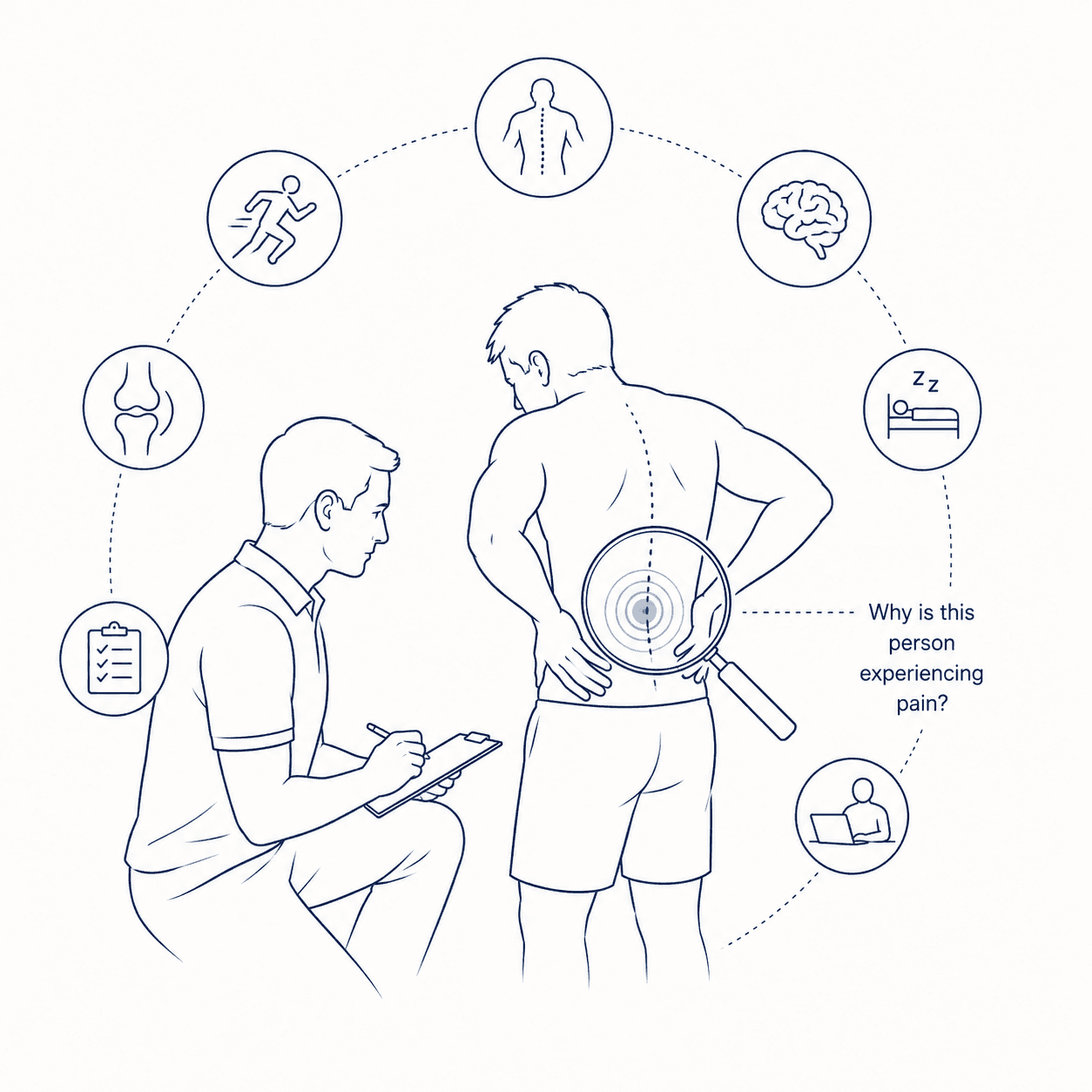
Your assessment may include:
- Movement and functional assessment
- Strength, mobility and flexibility
- Nerve and neurological examination
- Work, sport and lifestyle demands
- Previous injuries and medical history
- Your goals for recovery
Experience Matters
Not all back pain is straightforward. Matthew has spent almost two decades assessing people with back pain across emergency departments, inpatient wards and hospital outpatient services.
He led the design and delivery of the Austin Health Back Pain Rapid Access Clinic and was responsible for the hospital’s clinical care standard for low back pain, working closely alongside spinal surgeons and emergency physicians to manage people presenting with acute back and leg pain. You can read more about that background on the About Matthew page.
His approach has also been shaped by professional development with Professor Peter O’Sullivan, including an understanding of Cognitive Functional Therapy principles — widely regarded as the cutting edge of evidence-based approaches to persistent back pain management.
When Further Investigation or Referral May Be Needed
Most back, neck and sciatic pain can be assessed and managed by a physiotherapist without further investigation. Occasionally, symptoms indicate that imaging, a GP review, or specialist input would be a more appropriate next step — for example, where there are signs of a more serious underlying issue, or where symptoms aren’t responding as expected to physiotherapy management.
Where this applies to you, it will be discussed with you clearly, and a referral back to your GP or an appropriate specialist will be recommended.
Book Your Assessment
Speak with an Advanced Musculoskeletal Physiotherapist about your back, neck or sciatic pain.